Fit & safety guide

A good fit is a safer step

These general tips help walking aids and supports do their job. They don't replace instructions from your doctor or physical therapist — if their advice differs, follow theirs.

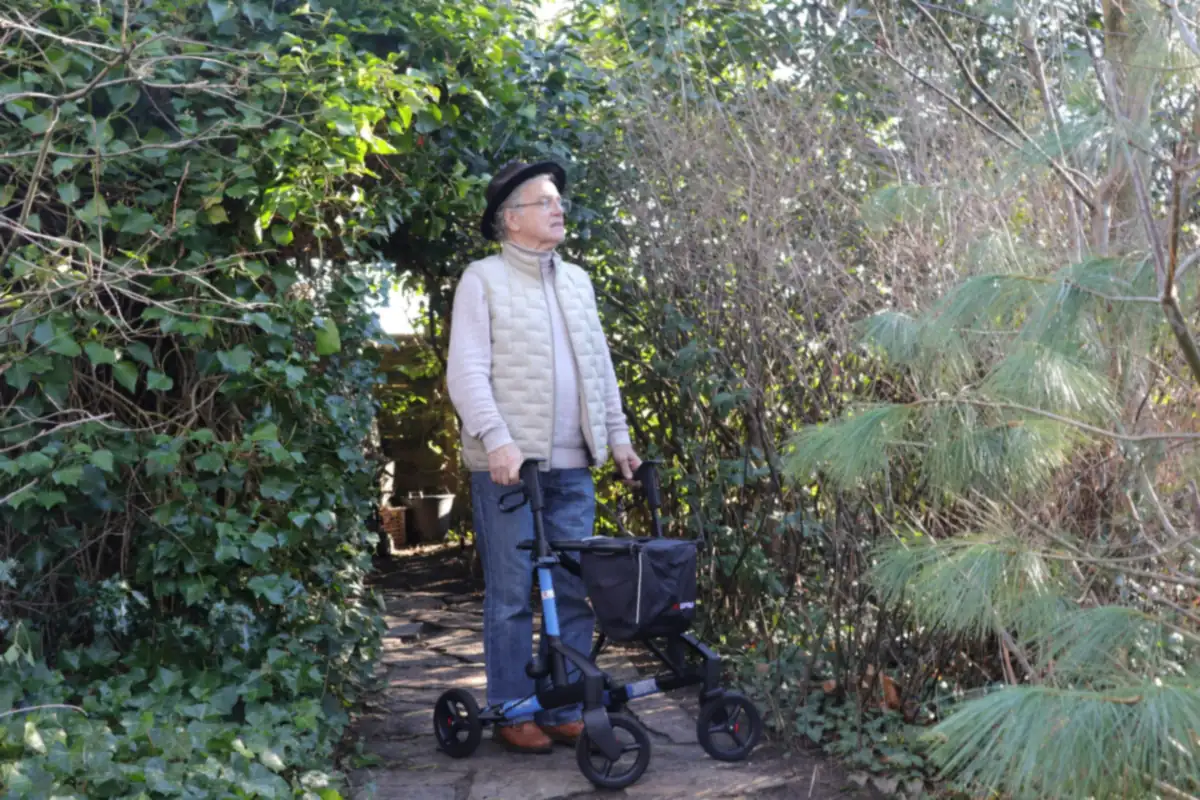
An older man walking with a rollator along a garden path
Fit checks

Quick checks by type

Canes

  • Stand tall in your usual shoes
  • Top of the handle near your wrist crease
  • Slight bend at the elbow when holding it
  • Rubber tip in good shape, not worn smooth

Crutches

  • Two to three finger-widths below the armpit
  • Weight on your hands, not your armpits
  • Hand grips at hip level
  • Tips and pads checked often

Walkers & rollators

  • Grips at wrist height with arms relaxed
  • Stand inside the frame, not behind it
  • Rollator brakes locked before sitting
  • Wheels roll smoothly, no wobble

Knee scooters

  • Knee pad at a height that keeps hips level
  • Handlebar lets you stand upright
  • Brake tested before every ride
  • Smooth surfaces only — never stairs
Around the house

Make your routes friendlier

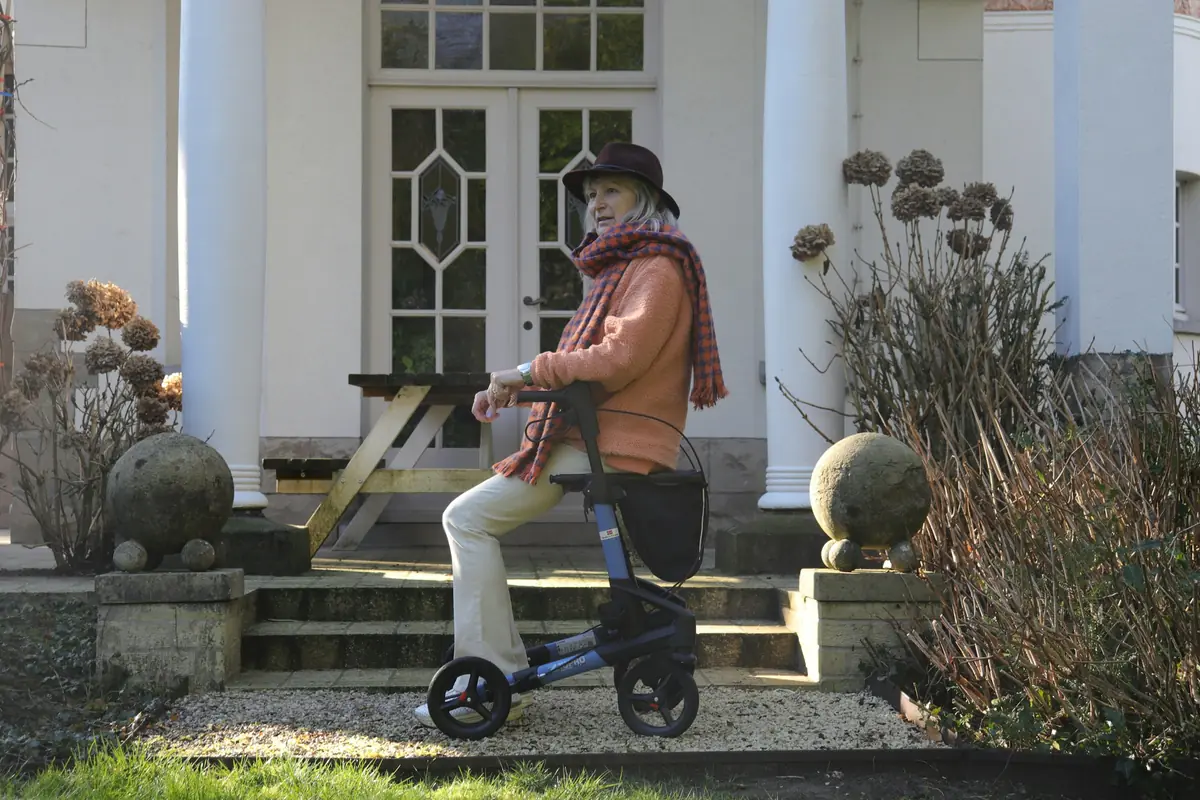
An older woman with a walker on the front steps of a house
Stairs & entries

Take stairs the way you were taught

Stairs are where walking aids need the most care. Your therapist can teach you a safe method for your aid — with crutches, many people learn to lead with the stronger leg going up and the injured side going down. Handrails help; a second person nearby helps more.

  • Ask your therapist to practice stairs with you
  • Keep steps clear and well lit
  • Never take a knee scooter on stairs
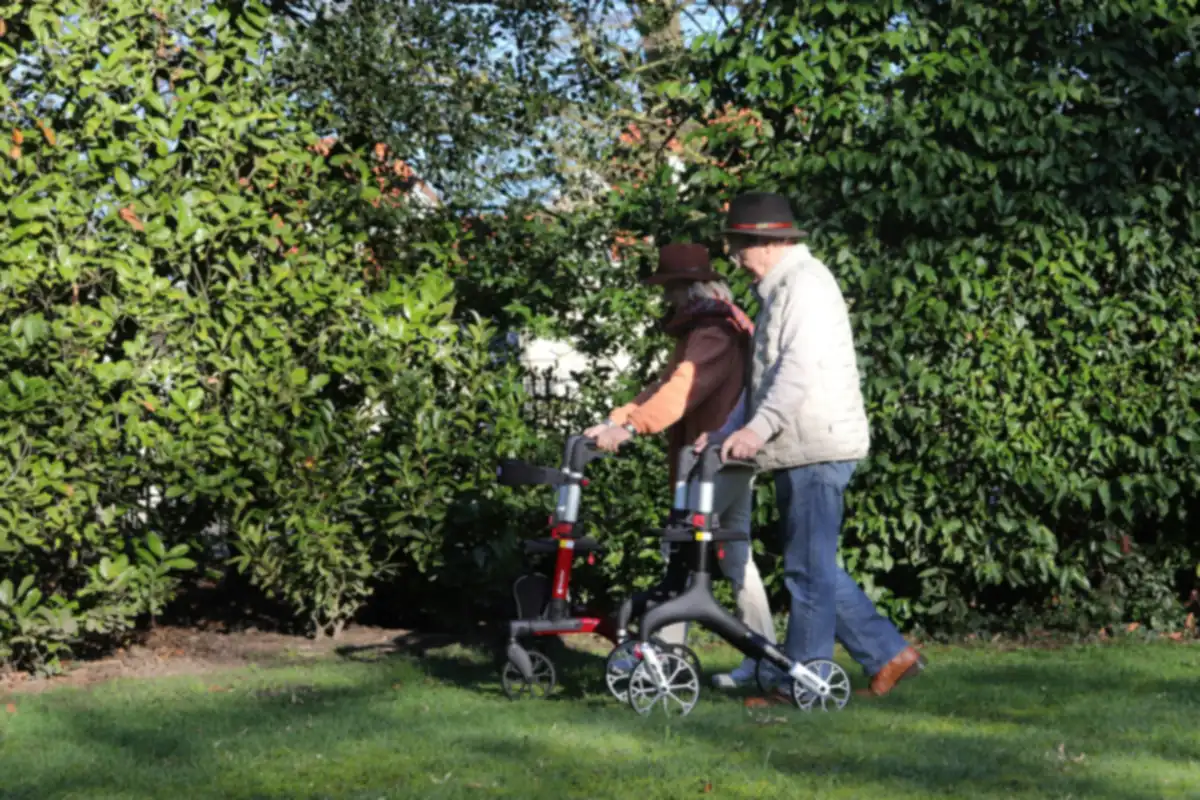
A man walking beside a woman who is using a rollator in a garden
Floors & paths

Clear the way

Rugs, cords and clutter catch wheels and tips. A clear path from bed to bathroom to kitchen makes every trip easier, especially at night.

  • Remove or secure loose rugs
  • Add night-lights along common routes
  • Keep frequently used items within reach
Two friends walking side by side along a park path in late afternoon
Out and about

Plan the outing

Curbs, gravel, wet leaves and crowded sidewalks all ask more of you. Start with short, familiar routes and build up as your confidence grows.

  • Wear supportive, non-slip shoes
  • Rest before you're exhausted
  • Carry a phone in a pouch or basket
Footwear

Your shoes are part of the system

Even the best-fitted walker or brace can't make up for slippery or floppy shoes. Look for closed heels, non-slip soles and a secure fit that doesn't slide when you walk. Avoid backless slippers, worn-out sneakers with smooth soles, and anything you have to grip with your toes to keep on.

If you wear a brace or boot on one foot, check that the shoe on your other foot gives a similar height and solid support. Uneven footing can throw off balance and make walking aids harder to use.

Braces & boots

Wearing supports comfortably

Put braces and boots on the way you were shown, with straps snug but not tight. Check your skin daily for redness, rubbing or blisters, especially if you have diabetes or reduced feeling in your feet. A thin, clean sock under a brace or boot can prevent rubbing.

Call your clinician if pain increases, swelling gets worse, toes turn pale, blue or cold, or you notice numbness or tingling.

Questions for your appointment

Bring these to your clinician

  • Weight-bearing

    How much weight?

    Can I put any weight on this foot? How much, and for how long?

  • Wear time

    How long?

    How many hours a day should I wear the brace or boot? Can I take it off to sleep?

  • Progress

    What's next?

    When might I move to a different aid, and what signs mean I'm ready?

Maintenance

A two-minute weekly check

Tips & wheels

  • Rubber tips still have tread
  • Wheels spin freely and track straight
  • No hair or debris wrapped on axles

Brakes & locks

  • Rollator brakes hold when squeezed
  • Parking locks click firmly into place
  • Knee scooter brake stops you smoothly

Pads, straps & frames

  • Pads aren't flattened or torn
  • Hook-and-loop straps still grip
  • Height pins fully seated in their holes

If something looks cracked, bent or loose, stop using it and call us. Small parts like tips and pads wear out faster than you'd think.

General information onlyThis guide is general and isn't medical advice. Follow the instructions of your own doctor, podiatrist or physical therapist. If you fall and are hurt, or have a medical emergency, call 911.

Something not fitting right?

Call us. A small adjustment often makes a big difference.