Rest stops
A seat when you need it
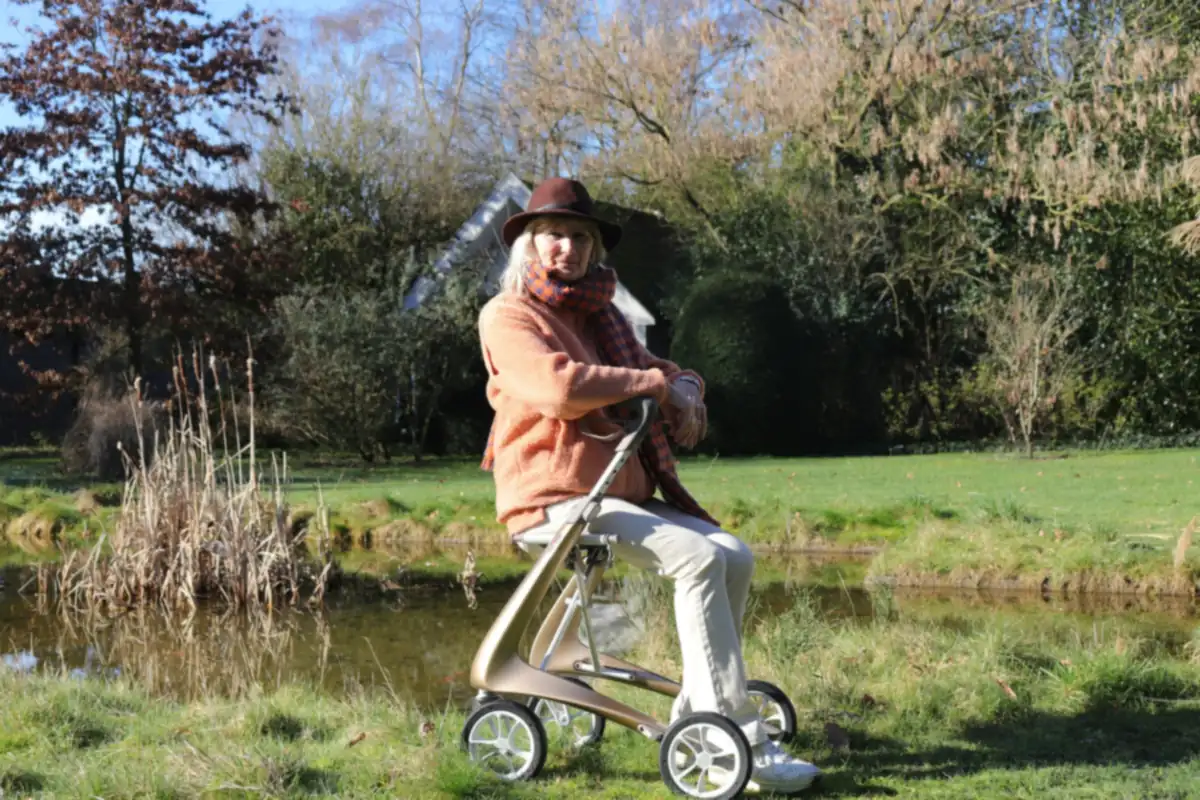
One reason people love rollators: the built-in seat. A short rest on a long walk can be the difference between staying home and getting to the park. Always lock both brakes before sitting.
Walking aids range from a simple cane to a four-wheeled rollator with a seat. The best choice depends on your balance, strength, weight-bearing instructions and where you want to go. Here's how the main types compare.
Light support for balance on one side. Single-point canes suit mild needs; quad canes with a four-footed base offer a bit more stability.
Used in pairs to keep weight off one leg after injury or surgery. Underarm and forearm styles each have their place — your therapist will advise.
A frame you hold with both hands for steady support. Standard walkers lift and step; front-wheeled walkers glide forward with less effort.
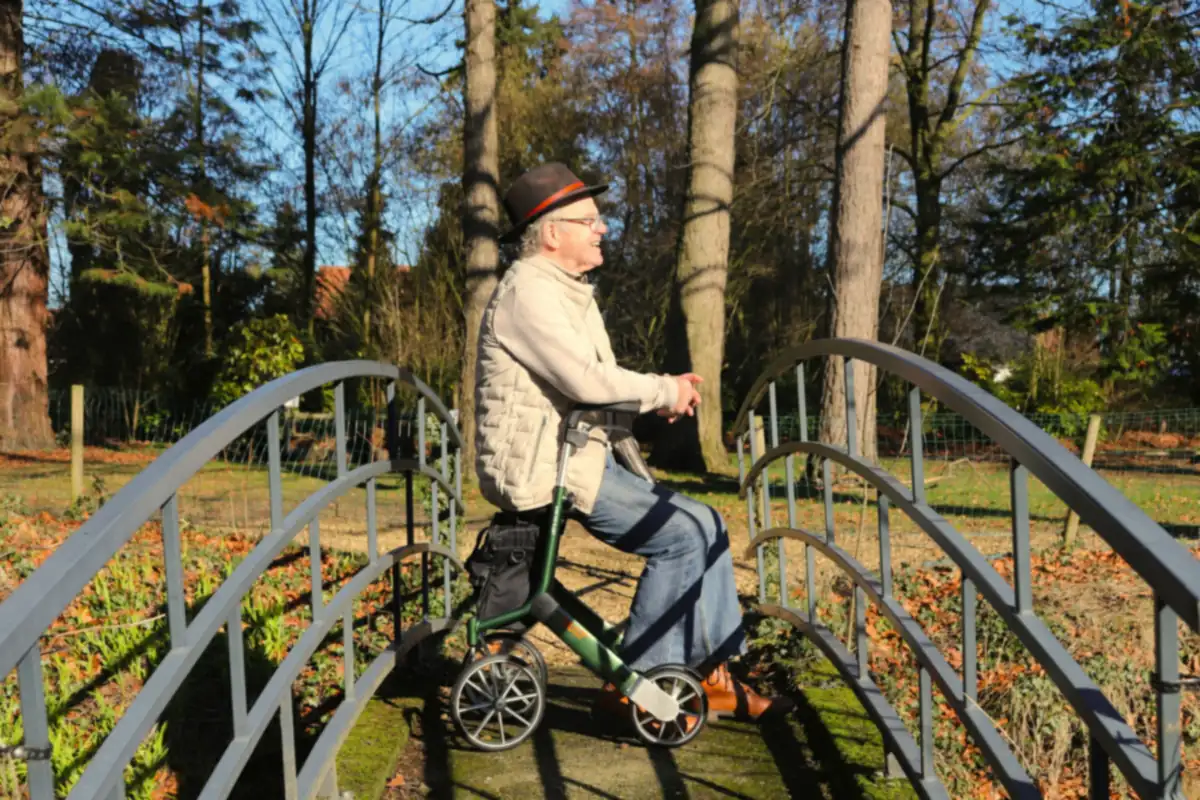
Four wheels, hand brakes and usually a seat and basket. Great for longer walks and errands for people who can walk without leaning hard.
Rest your bent knee on a padded platform and roll with your good leg — a popular option when you can't put weight on a foot or ankle.
Start with your clinician's instructions. If you've been told not to put any weight on a foot, a cane won't do — you'll need crutches, a knee scooter or a walker used the way your therapist shows you. If you're steady but tire on longer walks, a rollator with a seat might open up your day.
Next, think about your daily routes. Narrow hallways, stairs, carpet and curbs all change the picture. Knee scooters love smooth floors and sidewalks but struggle with stairs. Standard walkers handle tight spaces well. Rollators shine outdoors.
Finally, think about you: your height, hand strength, how much you'll carry, and whether the aid needs to fold into a car. We'll help you weigh it all.
| Type | Best for | Things to know |
|---|---|---|
| Cane | Mild balance help | Held in the hand opposite the weaker leg in most cases |
| Crutches | Keeping weight off one leg | Takes practice and arm strength; stairs need training |
| Walker | Steady support indoors | Can feel slower; very stable |
| Rollator | Longer walks and errands | Must use brakes before sitting; not for leaning heavily |
| Knee scooter | Non-weight-bearing foot or ankle | Needs good balance and smooth surfaces; not for stairs |
General comparison only. Your clinician's advice comes first.
One reason people love rollators: the built-in seat. A short rest on a long walk can be the difference between staying home and getting to the park. Always lock both brakes before sitting.
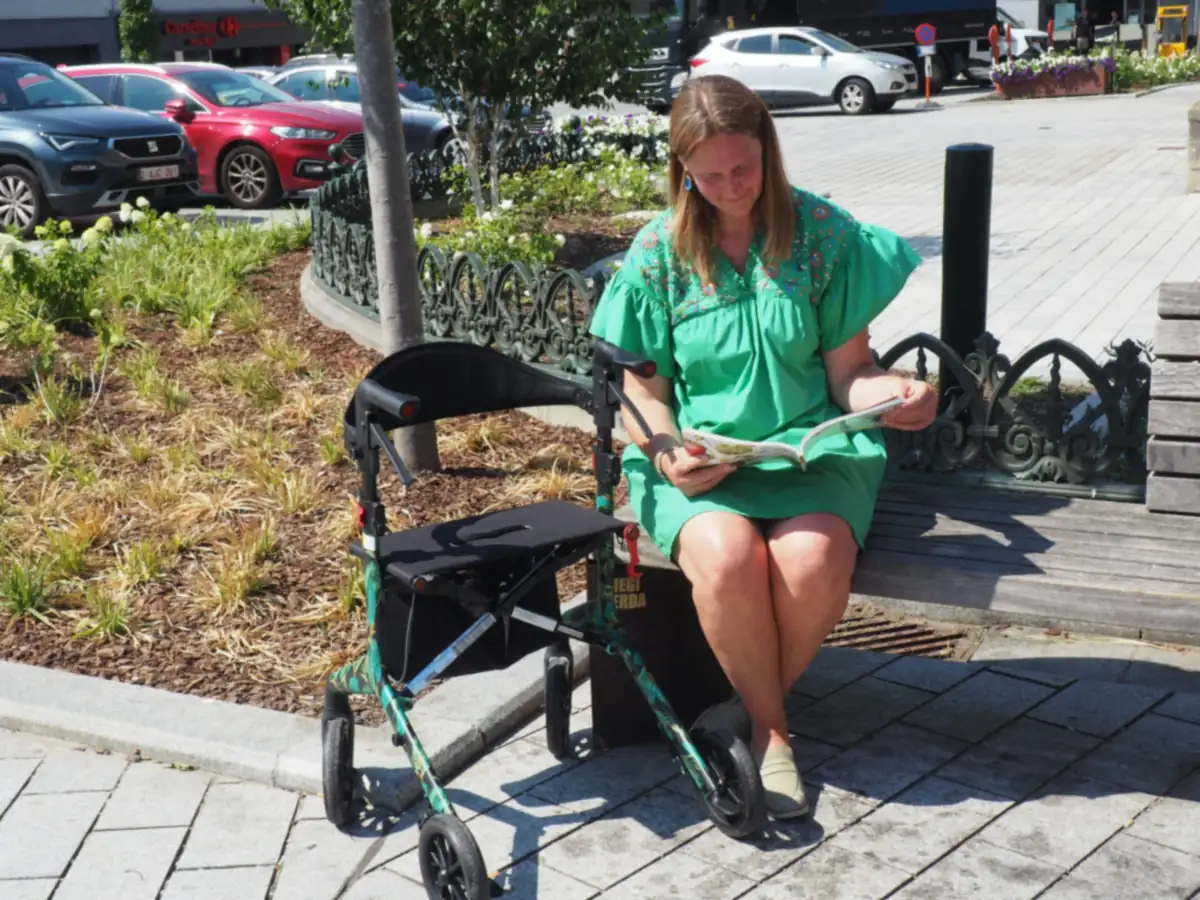
Baskets and pouches carry a water bottle, a phone or groceries, so your hands stay on the grips. Keep loads light and centered, and never hang heavy bags from the handles — that can make the frame tip. A short trip to the mailbox or a neighbor's porch is a great way to build confidence before longer outings.
Share your clinician's guidance and your daily routes. We'll help you narrow it down.